Most of us know what stress feels like, but it can be harder to understand what is happening in the body. When stress makes sense, it often feels less frightening and more manageable.
Quick Answer
Stress is the body's response to feeling threatened or under pressure. In the short term, it can help us act, focus and cope. Problems can happen when the stress response stays switched on for too long.
The aim is not to remove all stress from life. The aim is to help the body move more easily between activation and recovery.
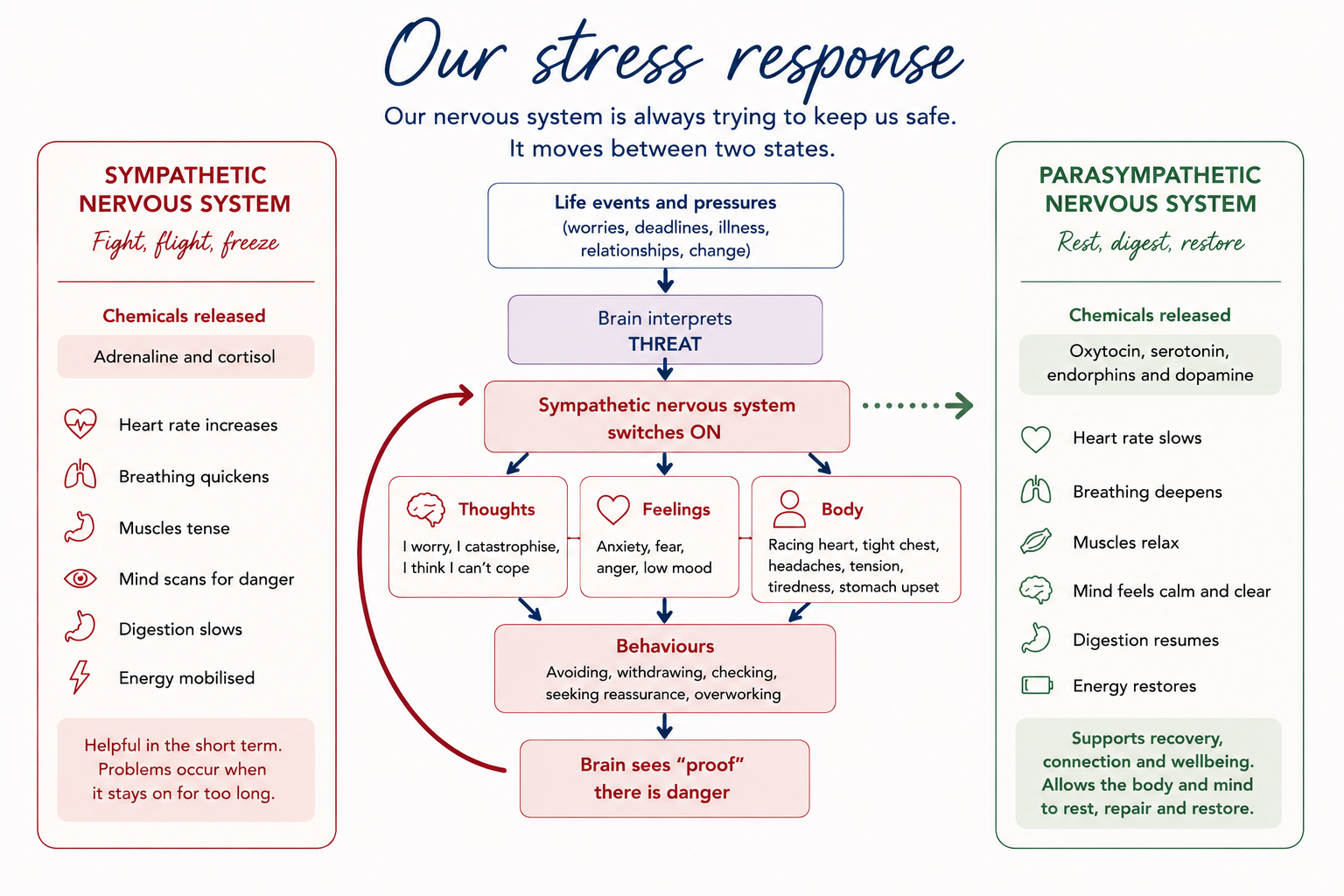
The Stress Response In One Picture
This is the model I often use to explain stress. It shows how life pressures can switch on the sympathetic nervous system, and how thoughts, feelings, body sensations and behaviours can keep the loop going.
What Is Stress?
Stress is a normal reaction to pressure, uncertainty, change, loss, illness, relationships, caring responsibilities, work, money worries or feeling out of control.
Your brain is constantly asking, "Am I safe?" If it senses threat, it can switch the body into a protective state before you have had time to think it through.
Fight, Flight Or Freeze
When the sympathetic nervous system switches on, the body prepares to survive. This is not bad. It is essential. It helps us react quickly, perform under pressure, protect ourselves and get through difficult moments.
The problem is not having a sympathetic nervous system. The problem is when the body cannot easily switch back down afterwards.
Ready for action
Heart rate rises, breathing quickens, muscles tense, digestion slows and energy is mobilised.
Scanning for danger
Thoughts can become faster, more negative or more catastrophic. Concentration and decision-making may become harder.
Threat emotions
Anxiety, fear, irritability, anger, low mood or feeling overwhelmed can all be part of the same system.
What About Cortisol?
Cortisol gets talked about a lot online, often as if it is a villain. It is not. Cortisol is a normal, useful hormone that helps regulate energy, blood sugar, inflammation, blood pressure and our sleep-wake rhythm.
In a stress response, adrenaline helps with the immediate surge: fast heart, quick breathing, alertness and energy. If the brain still thinks there is a threat, the HPA axis helps keep the body activated for longer, partly through cortisol.
Adrenaline
Released quickly when the brain senses danger or pressure. It helps the heart, lungs and muscles prepare for action.
Cortisol
Helps keep energy available when stress continues. It naturally rises and falls during the day, and is not automatically harmful.
Connection and calm
Rest and connection involve many body chemicals, including oxytocin, serotonin, dopamine and endorphins. The parasympathetic nervous system also uses acetylcholine to help slow and settle the body.
The aim is not to "detox cortisol". The aim is to help the body complete the stress cycle and return to recovery when the pressure has passed.
When The Stress Response Gets Stuck On
Sometimes the alarm system keeps firing even when there is no immediate danger. This can happen after long periods of pressure, trauma, illness, burnout, caring stress, work stress, loss, uncertainty or feeling unsafe for a long time.
It is important to recognise this because people can start to think they are weak, dramatic or failing. They are not. Their nervous system has learned to stay on high alert.
Tight chest, headaches, stomach upset, muscle tension, palpitations, fatigue or feeling wired but tired.
Difficulty falling asleep, waking early, vivid dreams or feeling unrefreshed even after enough hours in bed.
Worry, overthinking, irritability, poor concentration, catastrophising or feeling unable to switch off.
Avoiding, withdrawing, snapping, scrolling, overworking, checking, reassurance seeking, drinking more or comfort eating.
These symptoms are real. They are also changeable. The brain and body can relearn safety, but it usually takes repetition rather than one big perfect fix.
Why It Can Become A Loop
Stress can change behaviour. We might avoid things, withdraw, overwork, check repeatedly, seek reassurance, scroll, drink more, eat differently or stop doing the things that normally help us recover.
The brain may then read those behaviours as proof that there really is danger. The alarm system stays switched on.
Life feels too much.
The body switches into protection mode.
Thoughts, feelings and body sensations intensify.
Avoiding, checking or overworking keeps the loop going.
Rest, Digest, Restore
The parasympathetic nervous system helps the body recover. Heart rate slows, breathing deepens, muscles soften, digestion resumes and the mind can feel calmer and clearer.
This is not about telling yourself to "calm down". It is about giving your body repeated signals of safety.
This deserves its own article, because many people are never taught how to help the body move back into rest-and-digest mode. Read the companion note: Find your calm: the science of rest and repair.
What Helps The Body Feel Safer?
Different things work for different people, but the most useful tools tend to be small, repeatable and realistic.
Lengthen the exhale
Try breathing in gently, then breathing out a little longer than you breathed in. Do this for one minute.
Move the body
A walk, stretch, dance in the kitchen or a few squats can help use some of the energy stress has mobilised.
Name the loop
"This is my stress response." Naming it can create a little space between you and the alarm.
Reconnect
Talk to someone safe. Stress often grows in isolation and softens with connection.
Practise mindfulness
Mindfulness is noticing thoughts, feelings, body sensations and the world around you, without immediately fighting them or following them.
Use a guide
Apps such as Calm and Headspace can help some people get started with short guided breathing, meditation or sleep exercises.
Mindfulness is not about emptying the mind. It is about noticing what is happening and gently coming back to the present moment. NHS guidance says mindfulness can help people notice signs of stress and anxiety earlier and deal with them better.
What Is The Evidence-Based Bit?
There is no single magic reset button, but several approaches have evidence behind them.
Mindfulness
NHS guidance says studies show mindfulness can help with stress, anxiety and depression. NICE recommends mindfulness-based therapies for some people with less severe depression.
Talking therapies
CBT and related therapies can help people understand the links between thoughts, feelings, body sensations and behaviours, then practise different responses.
Movement and relaxation
Breathing, yoga, tai chi, walking and other physical activity can help complete the stress cycle and support the body's recovery response.
None of this means people should be left to "just manage stress" on their own. If symptoms are persistent, severe, linked to trauma, or affecting daily life, support matters.
When Should I Ask For Help?
Ask for help if stress is affecting daily life, sleep, work, relationships, eating, alcohol or drug use, or if things you are trying yourself are not helping.
GP or NHS Talking Therapies
A GP can help look for physical contributors, discuss options and signpost support. In England, adults can also self-refer to NHS Talking Therapies for anxiety and depression.
111, crisis services or 999
If you need urgent mental health help, use NHS 111 or ask for an urgent GP appointment. If you cannot keep yourself or someone else safe, call 999 or go to A&E.
Five Things To Remember
- Stress is a body response, not a personal weakness.
- The sympathetic nervous system is not bad; it is essential for action and protection.
- Problems happen when the alarm stays switched on for too long or cannot switch down.
- Thoughts, feelings, body symptoms and behaviours can keep the loop going.
- Small recovery signals, repeated often, can help the nervous system shift back towards rest and repair.
Dr Mel's Notebook
Did you know?
Your body can react to imagined, remembered or anticipated threat in a similar way to real danger. That is why worry can feel so physical.
Try this today
Set a one-minute timer. Breathe out slightly longer than you breathe in. Notice one body sensation before and after.
The evidence
NHS guidance supports mindfulness, activity, talking to someone and structured support. Harvard Health describes chronic stress as repeated activation of a useful survival mechanism that can affect physical and psychological health over time.
Useful Sources
NHS Every Mind Matters: Dealing with stress
Last updated: 9 July 2026